DJN POS — BIR-compliant point of sale for hardware retail
Multi-branch hardware-store POS: BIR-compliant invoicing with 12% VAT, the JAO 24-02 senior/PWD discount, per-branch stock at moving-average cost.
Sole engineer · 2026
Problem
A multi-branch hardware and construction-supply store lives under rules a generic POS ignores: BIR-compliant invoices with 12% VAT-inclusive pricing and gapless serial numbers, the JAO 24-02 senior/PWD special discount (5% on basic-necessity items like cement, plywood and GI sheets, capped per week per booklet), per-branch stock, and an audit trail that survives an inspection.
What I built
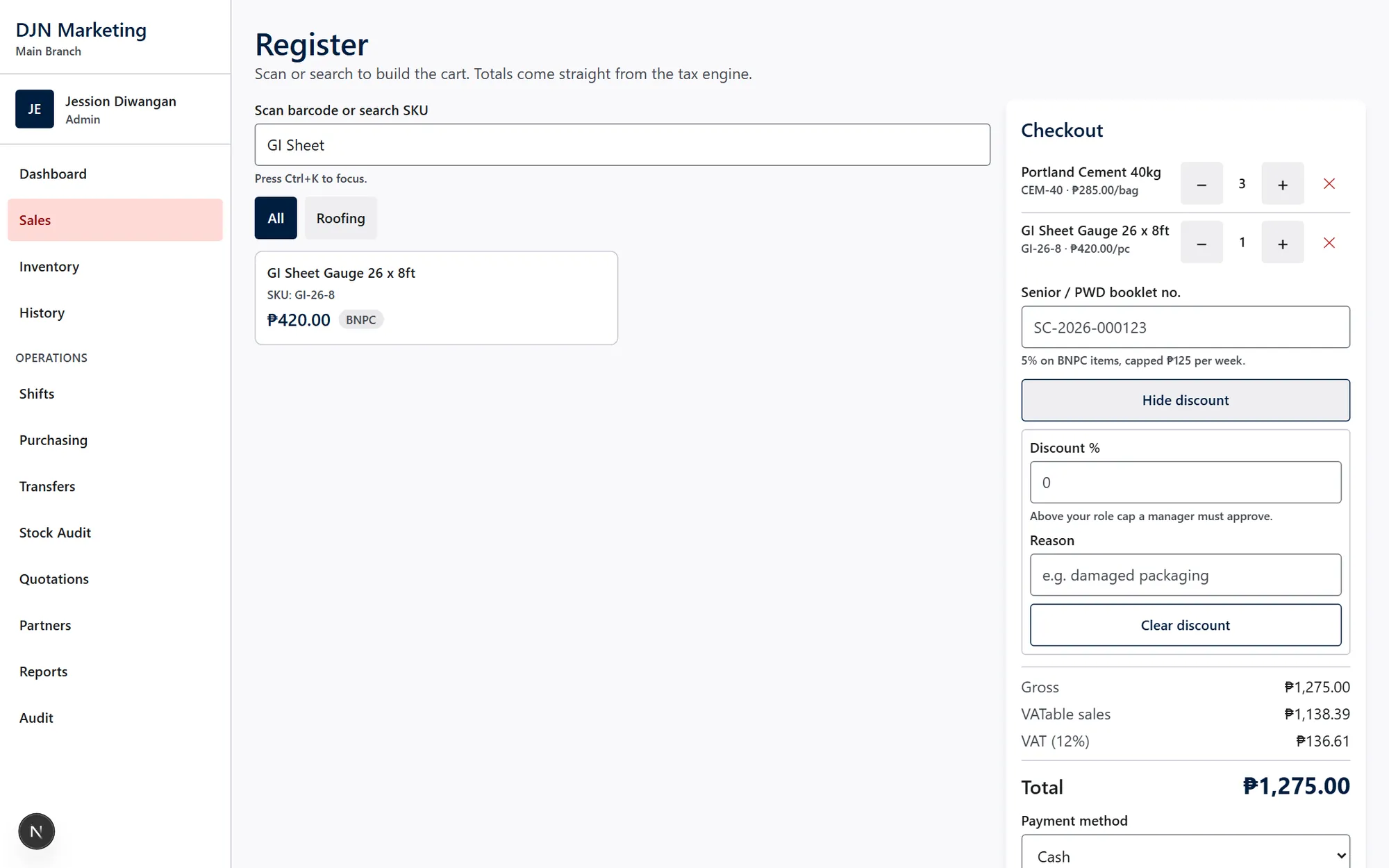
A multi-branch retail system where the tax engine, not the cashier, owns every number. The register builds a cart by scan or search and prices everything VAT-inclusive, showing the VATable/VAT breakdown live. A senior/PWD booklet number applies the JAO 24-02 discount — 5% on flagged prime-commodity items, capped at ₱125 per week per booklet — and any manual discount above a cashier's role cap routes to a manager for approval, with a reason recorded.
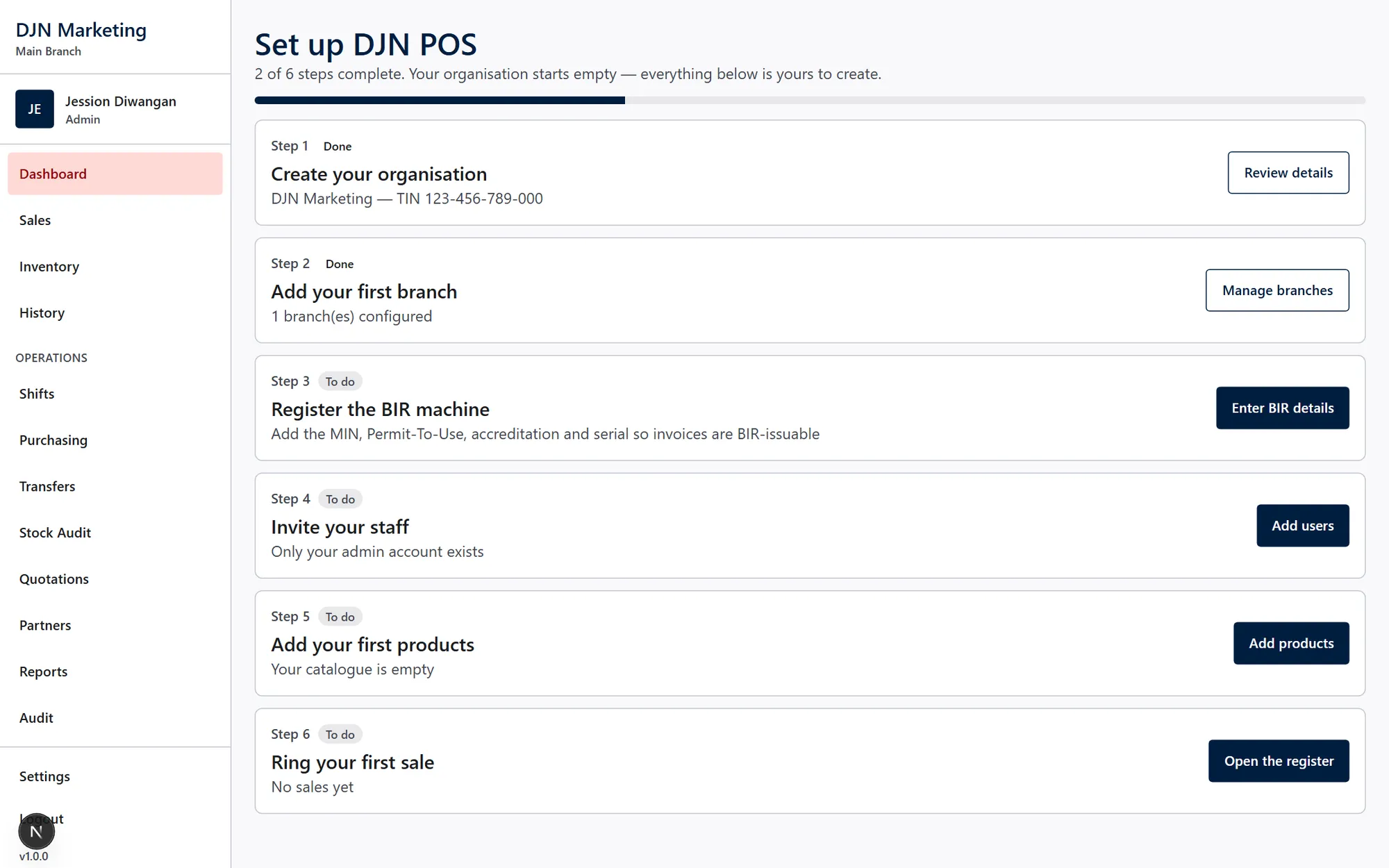
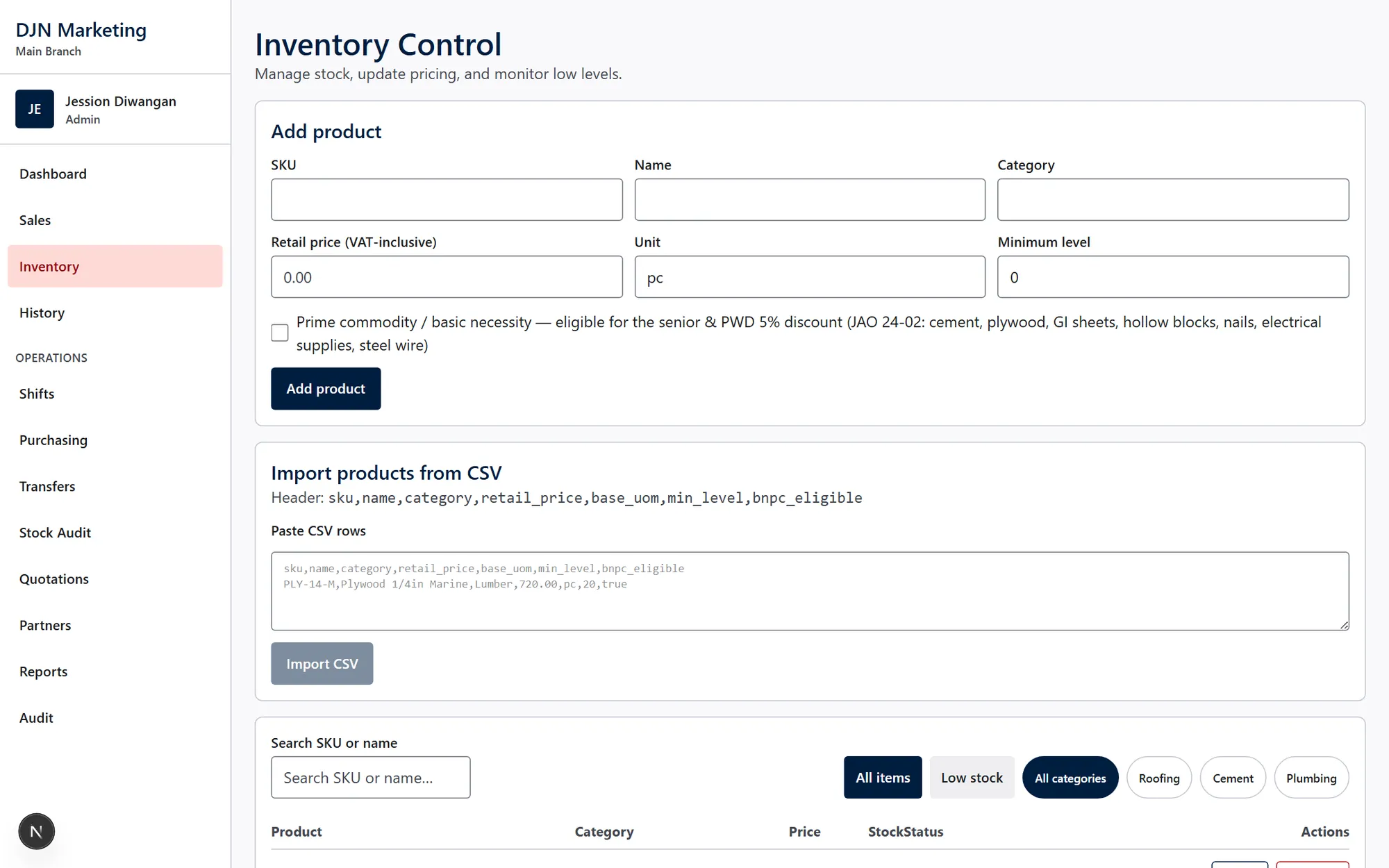
Operations around the counter are first-class: shifts with float, X-readings and a once-a-day Z-reading; purchasing with purchase orders and goods receipts that re-base moving-average cost; branch-to-branch transfers; stock audits; quotations; and a full audit log. Onboarding walks a new organisation from zero — company and TIN, first branch, BIR machine registration (MIN, Permit-To-Use, serials), staff, products (form or CSV import), first sale.
The guardrails are real: the register refuses to sell stock a branch does not have, invoice serials are gapless and backed by a non-resettable grand total, and every product flags whether it is JAO 24-02 eligible right on the form.
Result
A point of sale where compliance is the default: correct VAT arithmetic on every line, statutory discounts applied by rule rather than memory, per-branch stock that cannot go negative, and paperwork — invoices, readings, audit log — that matches what the BIR expects to see.